

The Charger Is Dodge's Biggest Disaster in 20 Years
More horsepower and torque isn't enough to outrun your own shadow.
 By Marcus Caughcus
- 08.03.2026
-
Share on XShare a link to this article on your X feed.
-
Share on FacebookShare a link to this article on your Facebook feed.
-
Send to a Friend or EnemySend a link to this article via e-mail to a friend or enemy.
-
Share LinkCopy a link to this article to your clipboard.
- Jump to CommentsView the comments for this article.
When Carlos Tavares took control of Stellantis in 2021, he embarked on a brutal crusade to purge every ounce of passion from its vehicle brands, laying waste to anything with more than six cylinders and a semblance of fun. Dodge and RAM took the most casualties as electrification became the company's new religion. With the Challenger put to rest, the Charger was reinvented under the banner of "EV muscle," trading its beloved octane-addicted powertrain for a heavy battery beneath the floor. Enthusiasts were disappointed, and two years after its debut, the Charger continues to prove itself both a commercial and cultural failure.
Controversy and disaster are hardly new territory for Dodge. A fitting precedent came two decades ago, when it killed off the beloved Neon and surrendered its commanding position in the compact market. The brand still hasn't recovered from that decision, with the Hornet now destined to join the Caliber and Dart in the Forgettable Compact Hall of Fame. Such a finale may be harmless for vehicles with little legacy to lose, but as its fans know, the Charger carries much more weight.
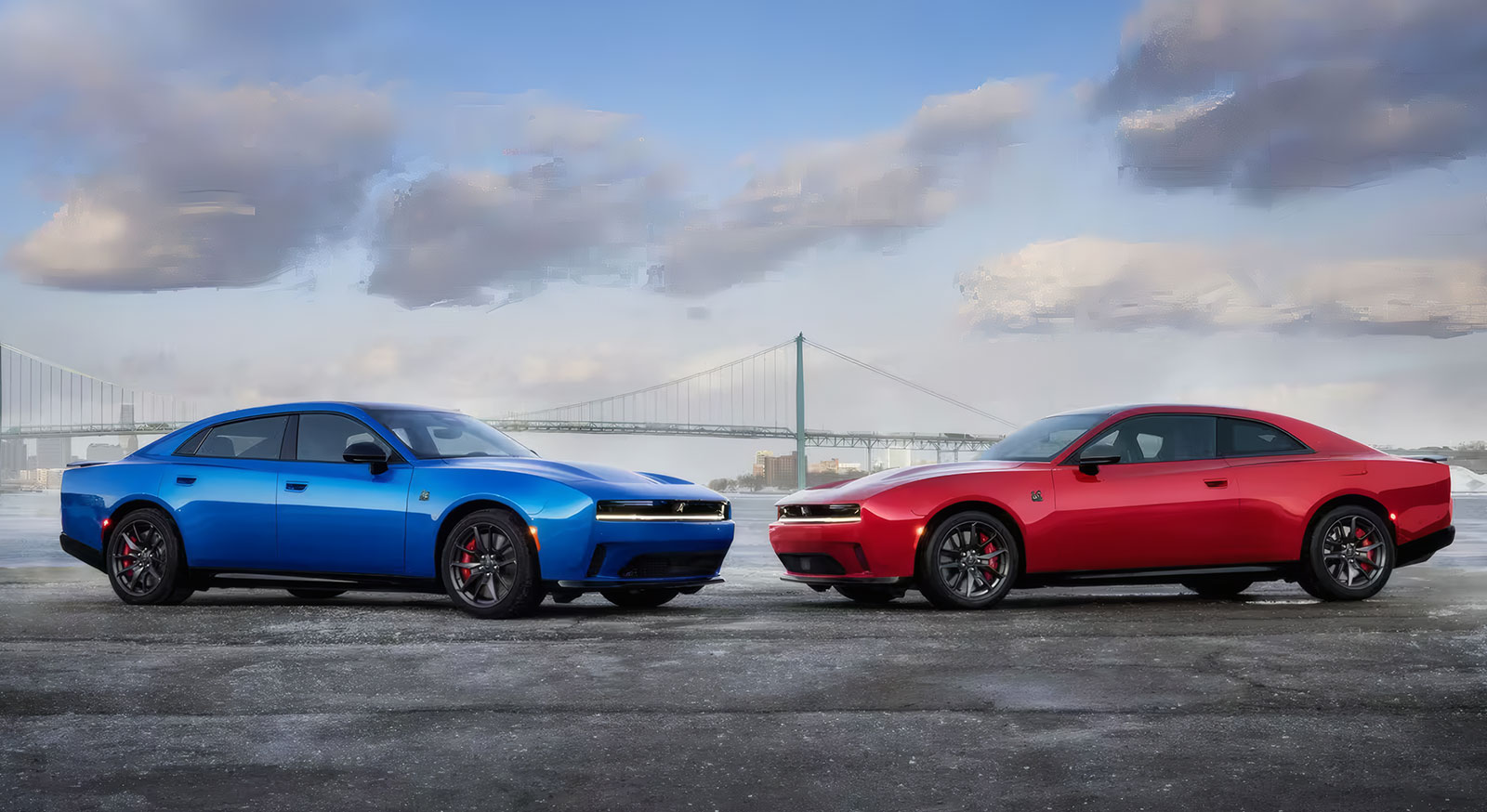
The 2026 Dodge Charger
FCA
That legacy has already suffered its share of indignities, most notably the Charger's embarrassing retreat into luxury during the late '70s and its subsequent rebirth as a four-cylinder hatchback in the '80s. When it was resurrected in 2006, it arrived as a large four-door sedan, a far departure from the roaring beast featured in Bullitt, The Dukes of Hazzard, and The Fast and the Furious. Purists were skeptical, but its signature crosshair grille, available SRT8 package, and everyday practicality garnered respect. Over the next several years, the Charger kept improving alongside its Challenger stablemate and became one of the brand's most iconic vehicles.
By 2015, both the Charger and Challenger were available in a wide range of trims that bridged the gap between grocery getter and full-fledged muscle. While the base V6 produced a healthy 300 horsepower, a selection of Hemis offered plenty of ways to top out at 400 more. The familiar 5.7-liter, the robust 6.4-liter Scat Pack later dubbed the 392, and the beautiful whine of the supercharged Hellcat all delivered distinct levels of performance at accessible prices.
The breadth of choice gave the Charger a welcome seat at a table mostly occupied by coupes, even if it couldn't always outmaneuver the Mustang or Camaro. Its sheer size and heft dulled cornering and made braking a battle against physics. Yet those differences rarely mattered once you punched the accelerator. Regardless of its shortcomings and two extra doors, the reaction was always the same: wide eyes, involuntary smiles, nervous laughter, and the unmistakable ecstasy of an iron block coming to life.
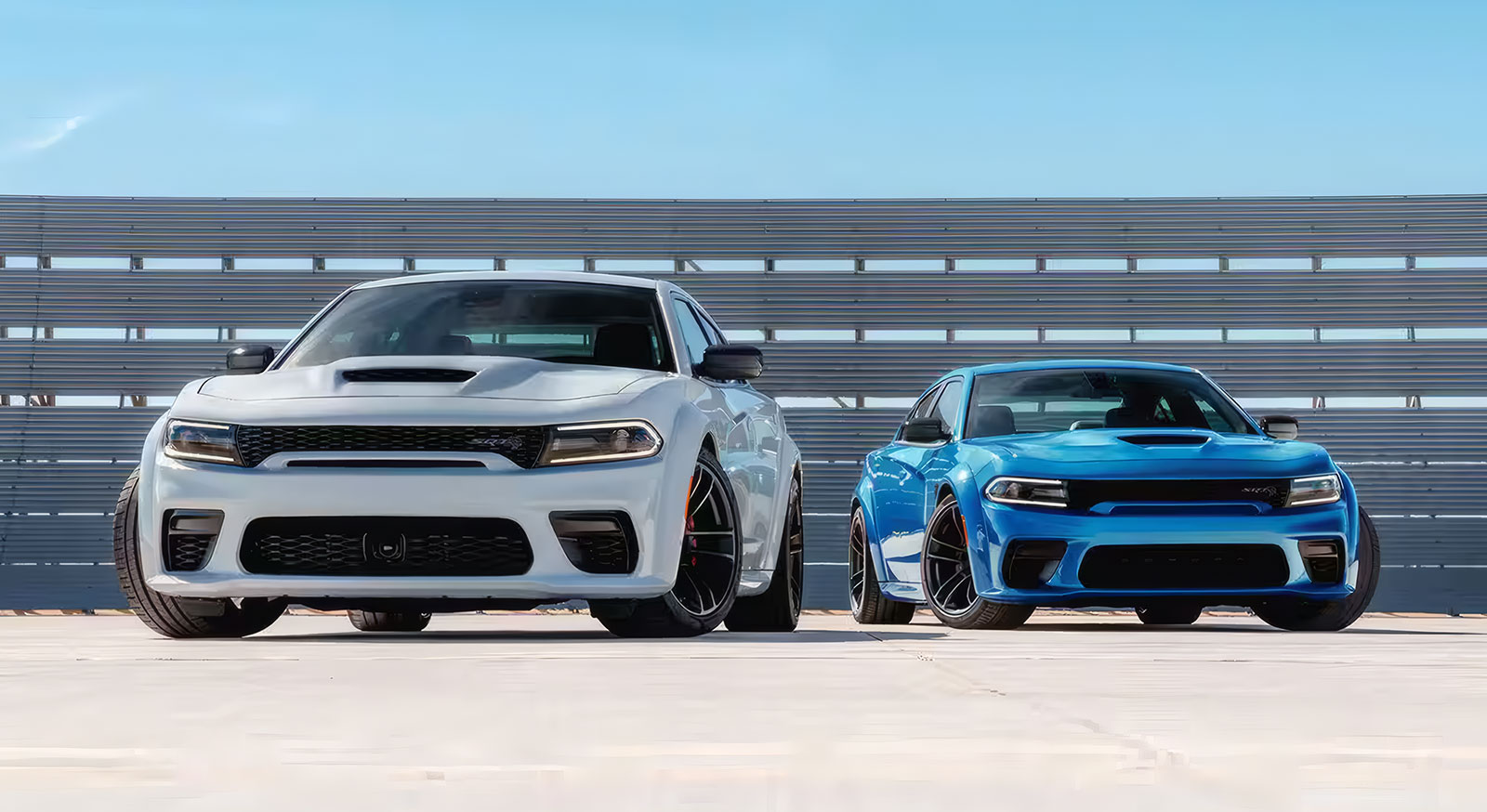
The 2023 Dodge Charger SRT Hellcat Widebody
FCA
This is what's missing from the new Charger. Despite an impressive list of features, what isn't included is the adrenaline rush as blood vessels expand and contract to render a combination of excitement, fear, exhilaration, and satisfaction on the face of a driver trying to bury the needle. The vibration throughout the chassis, the throaty growl ripping from the exhaust, tires smoking as they struggle to grip, the smell of heat and fuel, and the feeling of an engine straining against its own limits are just as important as what it can do in a quarter-mile.
Dodge tries to emulate those sensations with an MP3 moonlighting as a tailpipe, spit out of an audio system called the Fratzonic Chambered Exhaust, and it's nothing short of insulting. Raw power, even when delivered through a relatively unsophisticated drivetrain, has a character all its own. The noise and imperfections of an obnoxiously loud combustion engine were never flaws to be engineered away; they were integral components of the muscle car formula. The absence of that mechanical temperament is the Achilles' heel of "EV muscle" and, even with the newly released twin-turbo inline-six, its most critical defect.
The contrast can be seen throughout automotive media, especially in videos from YouTubers who capture their reactions behind the wheel. Watch Joe Raiti, Doug DeMuro, or ThatDudeinBlue stomp on the gas in a previous-generation Charger, or virtually any performance car with eight cylinders under the hood. Their faces light up. They scream and chuckle. Their anticipation becomes contagious. Watch those same reviewers in a new Charger and you barely witness any emotion at all. Sure, they respect its speed and handling, but their disappointment is a wide-open throttle that eventually gives way to boredom.
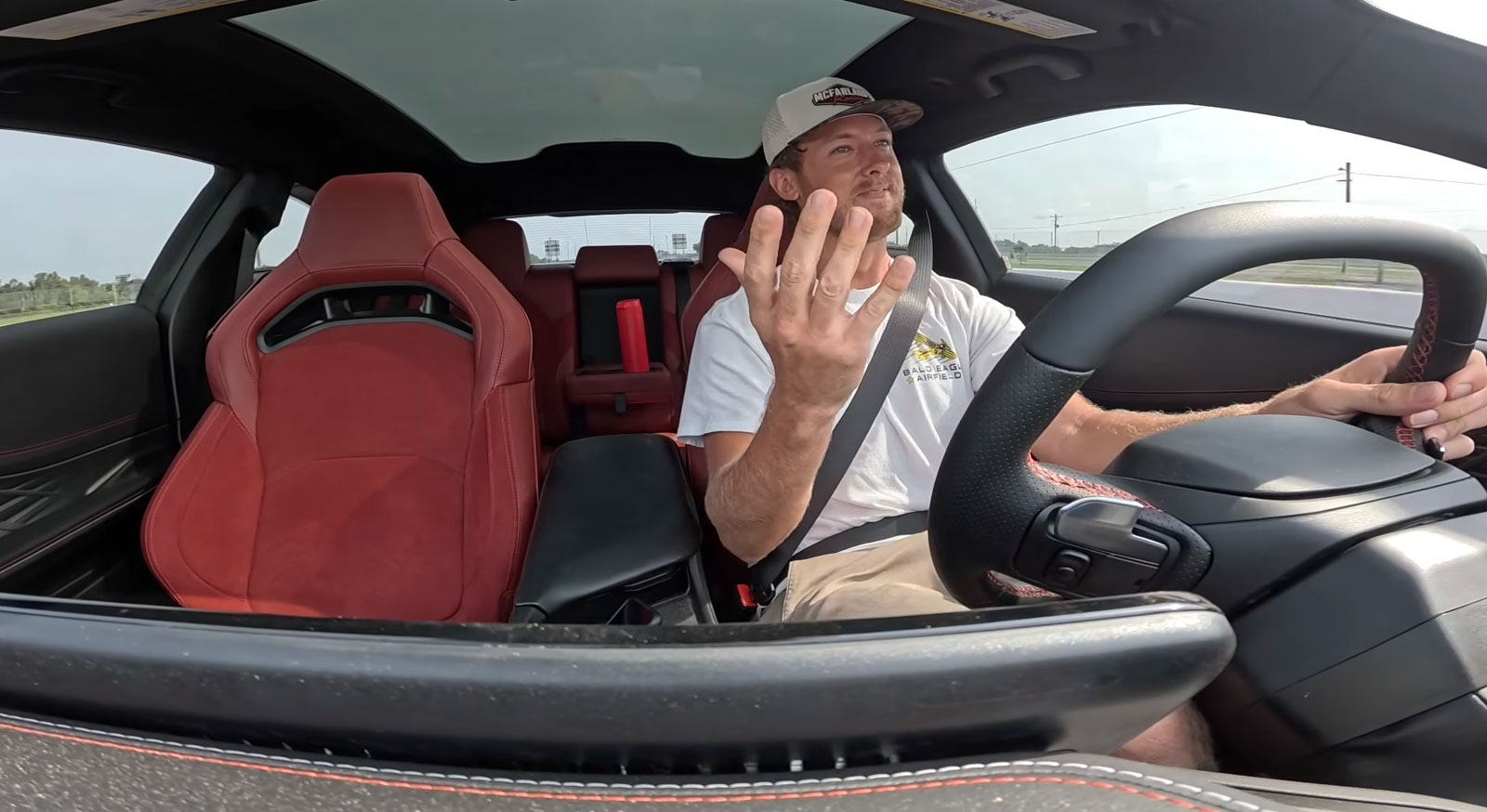
Cleetus fights to construct a genuine smile sitting inside a 2025 Dodge Charger Daytona Scat Pack.
The Cleetus McFarland YouTube Channel
That disappointment is perhaps clearest on the face of Cleetus McFarland, a YouTuber known for turning unlikely platforms into absurdly overpowered race machines. He acquired a Charger Daytona Scat Pack for half its sticker price from a dealership desperate to clear the aging unit off its lot, only to contend with sluggish pulls at the track, a massive crack along the corner of its expensive glass roof, and the defeat against a '78 Chevy C20 tug-of-war. By the end of the day, his contempt culminated into a video titled Testing The Worst Car In America.
Fortunately, Dodge and Stellantis are both under new management that isn't standing still. The 2026 Durango honors the spirit of the last Charger and Challenger, carrying their familiar performance hierarchy forward with the 5.7-liter, 392, and Hellcat trims. RAM will soon mirror that lineup in the upcoming 1500 Rumble Bee, transplanting the same three flavors of Hemi into a short-bed pickup. Rumors of a Charger Hellcat continue to circulate, but Mopar fans aren't holding their breath.
Until then, the Charger remains trapped in an identity crisis that could seal its fate. Abysmal sales have made the EV practically nonexistent on American roadways, forcing dealers to slash prices on stale inventory that have often sat for more than a year. The Charger Sixpack has fared slightly better, but its twin-turbo performance has struggled to attract much interest beyond tuners. Without the thunder of a heavy, gas-guzzling, lifter-tapping V8, Dodge's greatest sin is to continue calling an uninspiring vehicle with no soul a muscle car.