

 By Steven Cleamer
- 12.07.2025
-
Share on XShare a link to this article on your X feed.
-
Share on FacebookShare a link to this article on your Facebook feed.
-
Send to a Friend or EnemySend a link to this article via e-mail to a friend or enemy.
-
Share LinkCopy a link to this article to your clipboard.
- Jump to CommentsView the comments for this article.
We're coming up on the second anniversary of the world's greatest spy neatly folding his tactleneck for the last time, but I'm still suffering from withdrawal like Woodhouse without a needle and spoon. Although the tragic latter-half of the series helped soften the blow of FX's long-running animated spy parody coming to an end, the world is worse off without Archer insulting Lana's giant hands, Krieger rolling around in a van with illegal tint that screams rolling probable cause, and Cyril having his miserable existence mocked at every turn. It was a series best served during the last golden age of television, but its downward spiral is a reminder of how entertainment has hit rock bottom and is only now on the cusp of change.
Archer's blend of absurd James Bond-like antics and the day-to-day anarchy of a mismanaged office was a hit from the start. I enjoyed its whip-smart dialogue, brutal insults, and an ensemble cast of unforgettable characters. The show's best years were largely piloted by creator Adam Reed, whose sharp writing and unmistakable wit crossed into the danger zone long before anyone thought to call Kenny Loggins.
The show felt like a character study as much as it was a spoof of the spy genre, examining Archer's self-destructive impulses with the absurdities that festered inside the walls of the International Secret Intelligence Service. In the field, Archer squared off against everything from a Cold War dictator with suspicious paternal instincts to a cyborg hellbent on revenge, a quadruple agent who kept losing his own limbs, and if not the alligators of Florida, the cobras of Zimbabwe. However, none of these threats were nearly as dangerous as those back at home, whether it was Pam snorting a mountain of cocaine, Cheryl armed with a lighter, or Krieger trying to convince everyone that Pigly was a breakthrough in applied science.
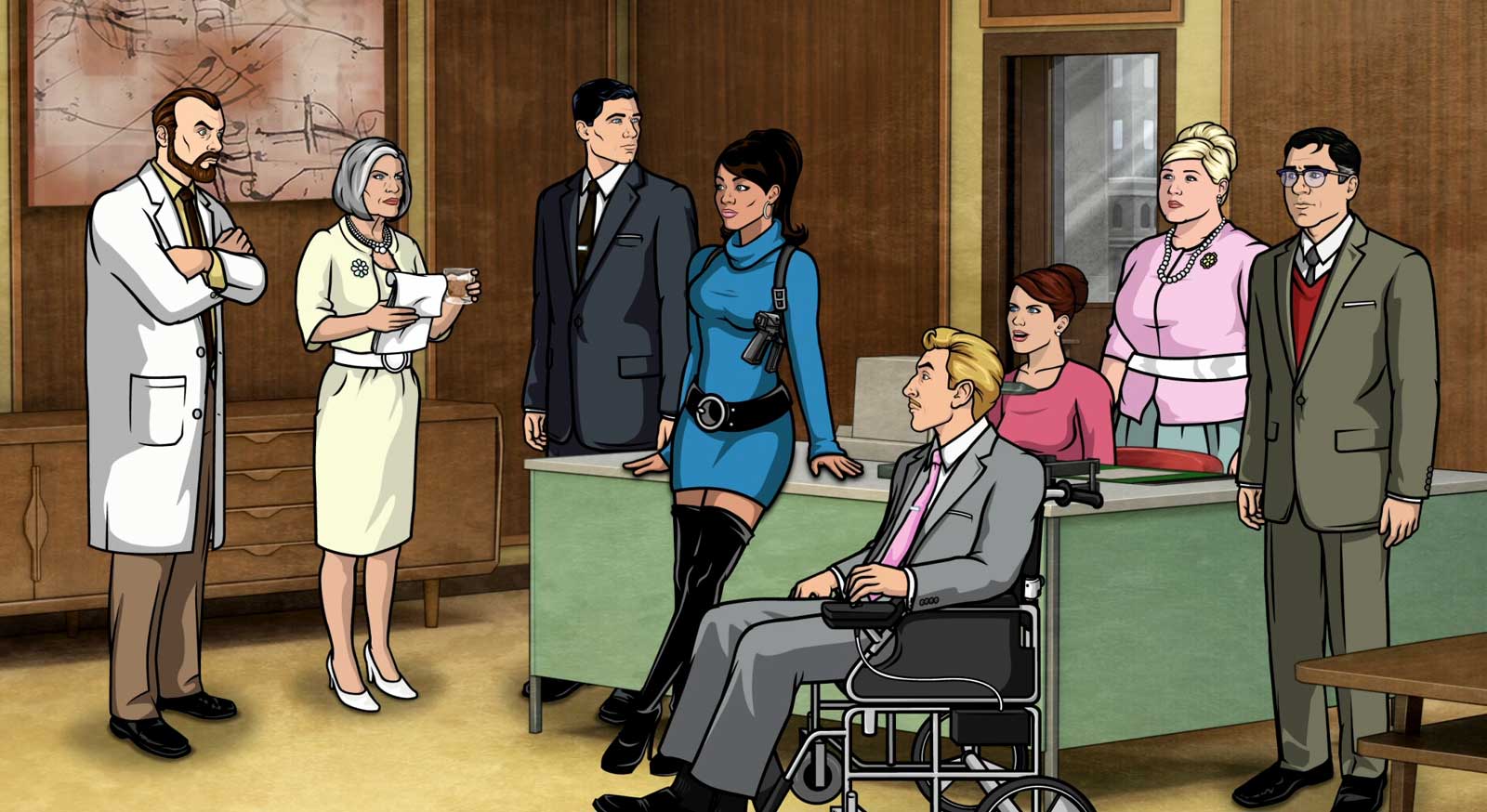
Lucky Yates as Krieger, Jessica Walter as Malory Archer, H. Jon Benjamin as Sterling Archer, Aisha Tyler as Lana Kane, Adam Reed as Ray Gillette, Judy Greer as Cheryl Tunt, Amber Nash as Pam Poovey, and Chris Parnell as Cyril Figgis in Archer (2009)
FX Networks
Together, this group of misfits least suited to run a spy agency was the greatest strength of the show. Lana, the only competent field agent in the building, contributed to the dysfunction by dealing with Archer's emotional crises more than international ones. Cyril oscillated between neurotic insecurities and baffling bursts of competence, usually undone by Archer's bullying or his own self-sabotage, all while endlessly juggling books that were a mess of embezzlement and blown budgets. Ray's demand for professionalism was admirable, but fervently ignored, costing him a steadily escalating list of injuries patched up with ridiculous cybernetic upgrades.
Even Malory Archer's ruthless leadership, soaked in gin and contempt, kept things moving with equal parts manipulation and sheer force of will. Individually, everyone at ISIS was a walking disaster; collectively, they were something close to a functional team, a chaotic found family that gave the show's most unhinged moments surprising amounts of depth.
For all of the unique traits that made up this ragtag team of reprobates, nobody embodied its spirit better than Pam. She was the rampage-fueled beating heart of ISIS, a human wrecking ball wrapped in a tattooed package of unearned confidence and unstoppable enthusiasm. She could outdrink the entire office, bare-knuckle brawl half the planet, and drop a deuce packed with pool balls. It didn't matter if she was willingly choking to death on a shellfish platter or her cooch was wet enough to drown a baby; Pam operated on a level no one could get on top of. Phrasing, boom!
She was even better when teamed alongside Carol, I mean Cheryl, whose deranged impulses made getting strangled to climax by a robot arm or crowning herself Martian royalty on a hijacked space station just another Tuesday. They were always entertaining on their own, but together, their lunacy became weaponized.
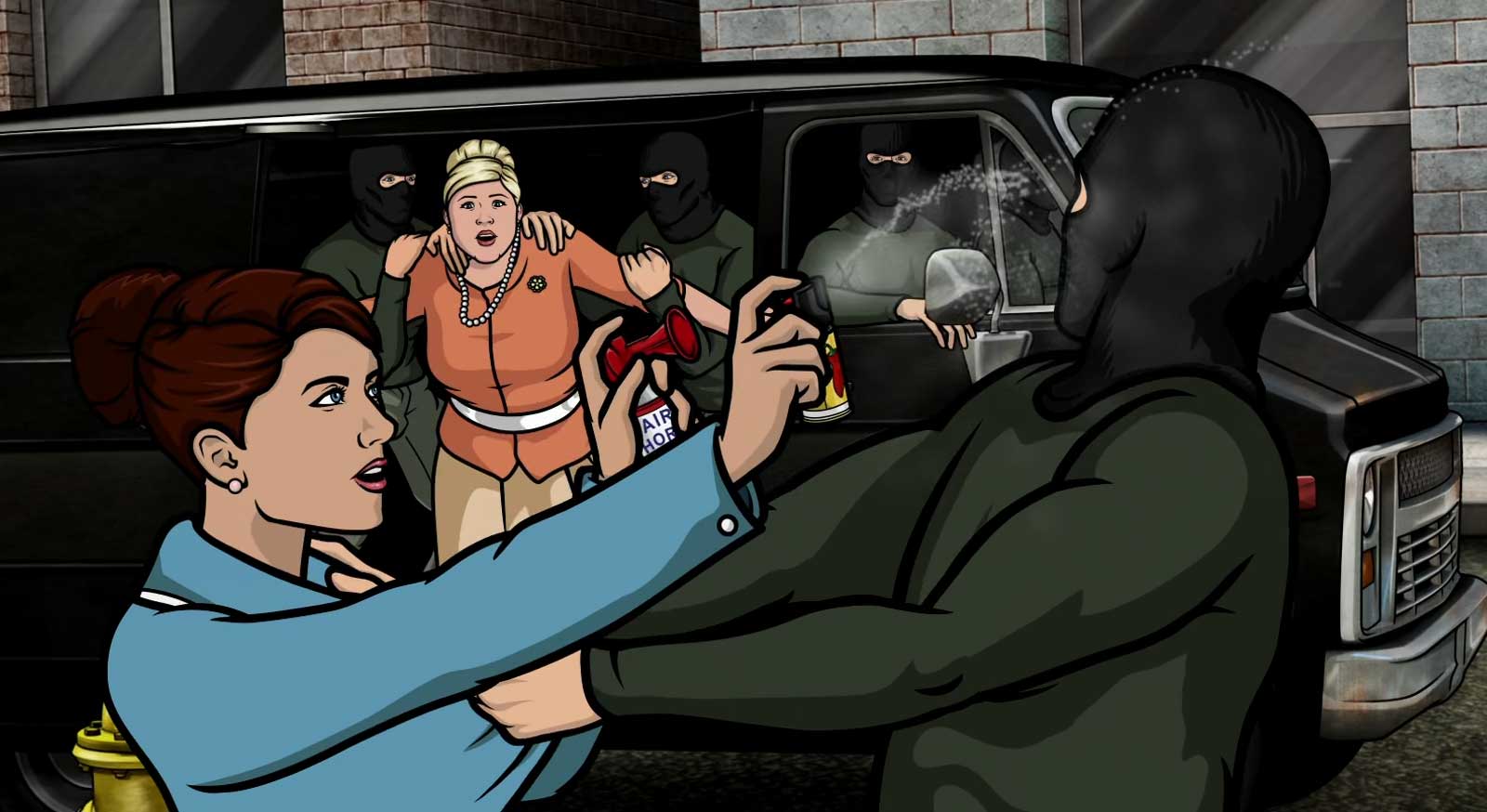
Judy Greer as Cheryl Tunt and Amber Nash as Pam Poovey in Archer (2009)
FX Networks
This is what I miss about Archer the most. The psychological napalm, the unchecked narcissism, and that glorious, unfiltered lack of empathy that held it all together better than a bottle of glue parked underneath Cheryl's nose. Comedy was stronger and more confident when Archer unapologetically nicknamed the office's weakest link Cyril Faggis or wandered a Monaco hotel calling his French concierge Benoit Balls. These moments were a reminder that writers once trusted audiences to laugh, cringe, and suck it up without crying about a hate crime.
The show had no reservations doubling down on moral bankruptcy. Your poison could be Krieger's bickering anime hologram with a blossoming cherry or Malory committing war crimes to finance a condo remodel. Detours only added fuel to the fire: the feds hijacking the agency, ISIS getting erased from the stationery, and the entire crew becoming the least competent drug cartel in history. It was deranged, reckless, and unmistakably Archer. But lightning rarely strikes twice, and once they reinvented themselves a second time as private investigators in California, a bullet punched through Archer's chest and the series bled out right beside him.
Archer doomed itself by drifting too far off-mission. A three-year coma became a trio of self-contained dream worlds, each set in a different era with familiar faces assuming unfamiliar roles. There were flashes of brilliance in the noir alleys of 1940s Los Angeles, French Polynesia on the eve of World War II, and the far reaches of space, but none of it had any meaningful cohesion to matter. It was a bold experiment that dragged on far too long, and despite Archer eventually waking up, the show's signature charm never did.
By the time Archer was on his own two feet again, tactical cane notwithstanding, the show had lost me. The nuanced quips and fantastic historical citations that gave the series its punch just didn't quite land anymore. Adam Reed wasn't in charge, and it showed, as his creative replacements began undercutting its lead character. The spy business was booming again, but the man who once had the balls to go undercover donning roller skates, a lollipop, and a t-shirt that read "Got Dick?" remained forever handicapped.
The final seasons made things worse. New management took over the agency, led by a man whose severe speech impediment practically begged to be a running joke, yet somehow remained completely untouched. Lana eventually replaced Malory, but never came close to filling her shoes. Then came Zara, the incredibly annoying British-Indian new hire whose only purpose was to knock Archer down a peg, a job far superior characters and guest stars had already mastered seasons earlier. Many argued these changes were to fill the void left by Jessica Walter's passing, but by the time they became cemented, the show had already flatlined.
As the world around him expanded, Archer kept shrinking, outnumbered by villains and side characters who felt painfully generic compared to the eccentric sociopaths the show once excelled at producing. It became clear the writers were trying to teach him some grand lesson in humility, aging gracefully, and adapting to a changing world, but that was never Archer. He had no interest in touching moments of self-reflection; he thrived on refusing to acclimate, and the show forgot that the only thing he was ever really meant to learn was nothing at all.
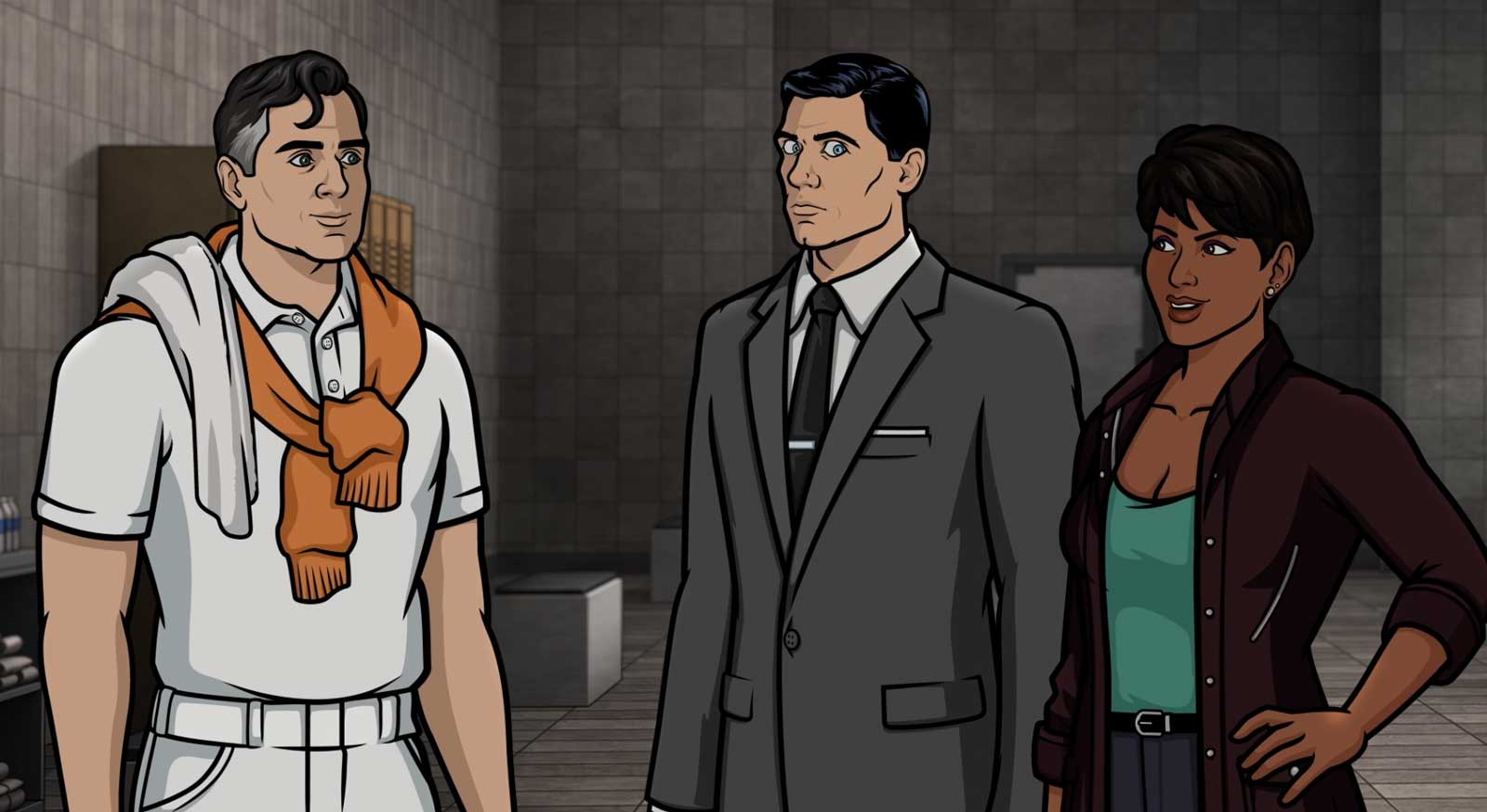
Kayvan Novak as Fabian Kingsworth, H. Jon Benjamin as Sterling Archer, and Natalie Dew as Zara Kahn in Archer (2009)
FX Networks
Archer became another victim of the same cultural shift that made Hollywood terrified of itself. It was so noticeable that even Archer himself seemed frustrated, repeatedly demanding that phrasing be brought back after its long, inexplicable absence. A show built entirely on equal-opportunity abuse was now afraid of its own shadow, airing on a network branded as "fearless" that once gave us Dennis Leary sitting in a room full of firefighters debating which ethnicities had the best racial slurs.
Still, despite its flaws, Archer is a fantastic reminder of what television used to be, when writers and networks truly were fearless. Its best moments outshine its worst, and there isn't another animated comedy that could pull off turning a counterfeit drug ring and a batch of breast cancer meds swapped out for Zima into the third matinee of Terms of Enrampagement.
The series finale left the door behind it cracked open, and while better days for entertainment remain far on the horizon, there's still a tiny glimmer of hope for a second coming once it's been fished out of the sink.